
Japan
In Japan you can hire a father, a wife, a daughter, a roomful of mourners. The unsettling part is how little it seems to matter.
The man at the gate has brought a kite. It is the wrong season for kites, but the boy asked for one, so there is a kite. On the train he read the file: the boy is seven, he is afraid of the dentist, he calls custard pudding purin and will not eat the skin. He lost a tooth last week, the upper left, and in this house the tooth fairy leaves a coin and a short note, so the man has written the note in advance and folded it into his pocket. He knows the boy’s teacher’s name. He knows which character the boy draws when he is happy and which when he is not. When the boy comes flying across the playground shouting Papa and hits him at full speed, the man kneels and opens his arms and catches all of it, and for the length of one good breath it is the truest thing in the world. Then he checks his watch, because the session is ninety minutes, and he is due to be a different father across the city by four.
Along with babysitters and actors, you can hire this in Japan. A father, this one, for this particular boy, who believes the man is his and has always been his. You can also hire a husband to silence your mother, a wife to soften your landlord, a daughter, a best friend, an entire wedding hall of guests who will weep on cue and never think of you again. You can hire someone to absorb a scolding you cannot bear to deliver, or to deliver one you cannot bear to give yourself. You can hire a person simply to sit beside you while you cry.
It has the flat, clerical texture of any other service, and the clerical texture is the worst of it: there are rates, repeat clients, a man somewhere keeping a roster of strangers and matching them to the gaps in other people’s lives. I am not going to tell you this is strange, or particularly Japanese, or a symptom of some lonely modern sickness, because I do not believe any of those things. I am going to tell you it is one of the most honest arrangements I have come across in a long time, and that the honesty is the part that interests me.
I keep circling what is being bought here. Not love, and not the appearance of love. The terror of family was never that they might not love you. It is that they can love you and go anyway: die, drift, marry someone who cannot stand you, stop calling. Love is the most unreliable delivery system we have for the thing we keep mistaking it for, which is reliability: the dull, daily, unglamorous fact of someone being a constant. The rented father is there on the fourteenth because the fourteenth was booked and paid. There is no version of the afternoon in which he is too tired, or met someone, or forgot to show up. He is one of the few fathers in the country whose reliability has been engineered rather than hoped for.
The women who rent husbands to get through a family dinner often keep the same man for years. The mothers who rent fathers watch their children grow up loving someone the children will never be told was invoiced. And the actors, who took the work because it was work and they needed it, discover that you cannot express affection forty times for the same child without something in you leaning, even against your will, toward the real. The husband-for-hire starts to dread the date the booking ends. The hired father gets a message on a Sunday that is not booked, a photograph of a school report and nothing else, the daughter letting him be the first to see it, and he answers, and does not charge for it, and tells no one.
The performance refuses to stay a performance. It cannot. After enough repetitions the difference between meaning it and performing it narrows to almost nothing.
And somewhere around here, I think I understand what is being bought after all. It was never the love or the look of it. What you are buying is a witness who is contractually forbidden to leave.
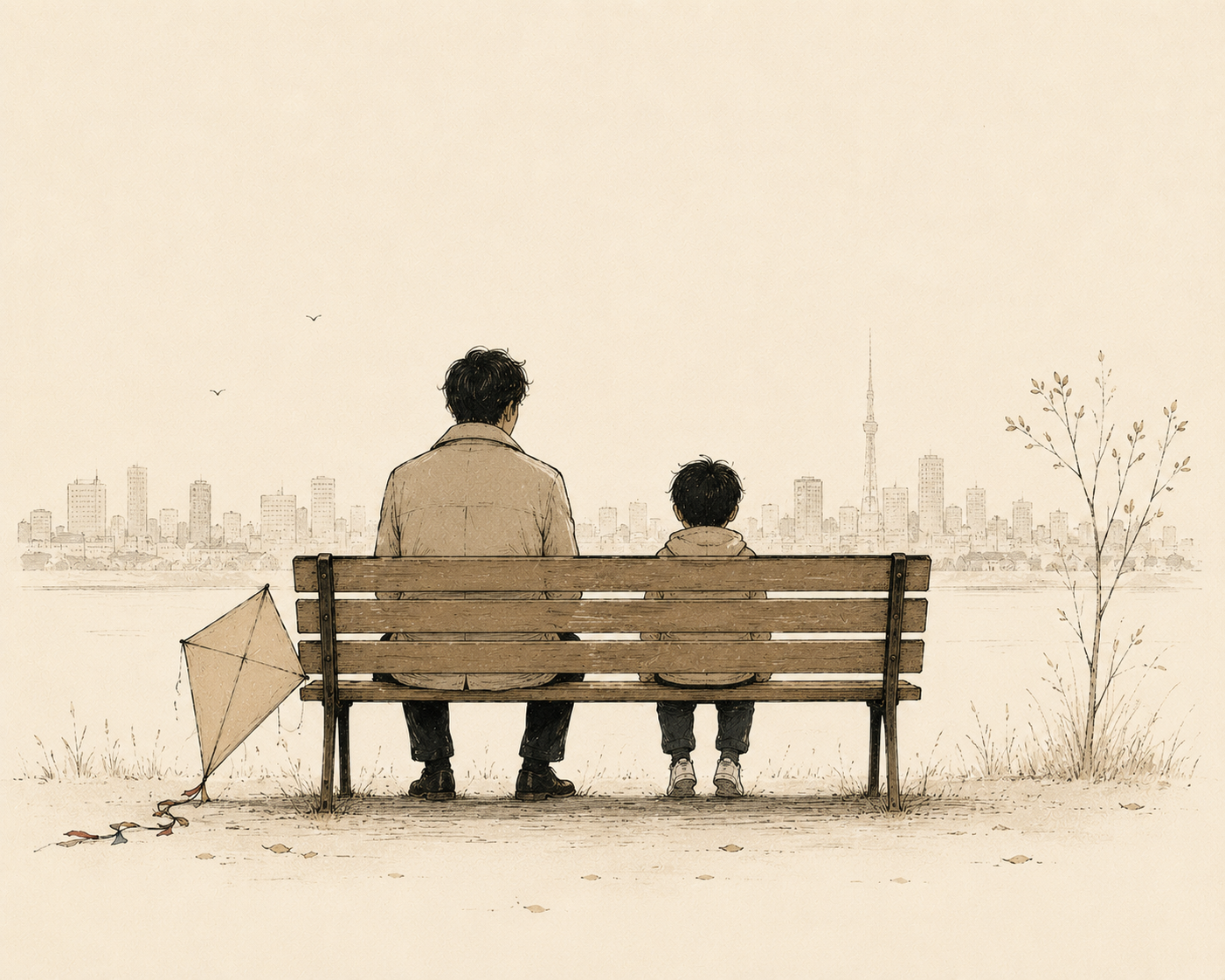
Whatever is happening inside the man is invisible and, more and more, beside the point, which leaves me with a question. If feeling is the invisible part and arriving is the real part, how sure is any of us about which of the people in our own lives ever meant it.
I have worn aso-ebi to the wedding of a woman I had met twice, and cried a little at the part where the father gives her away, and meant it, and gone home having performed an intimacy that did not exist and felt, for the length of the ceremony, that it did. I have sat at a bedside and arranged my face into the granddaughter the room needed me to be, present and unhurried, while some colder part of me counted the minutes until I could leave. On my most tired days I have been a hired version of myself inside my own life, showing up because showing up was expected. The only real difference between me and the man on the train is that he knows his rate.
As for the daughter, nobody resolves her. She is grown now. Somewhere there is a woman whose father came on the fourteenth, who taught her to balance on a bicycle and stood at her graduation and was, by every measure a child has available, a father, and who was paid in cash she never saw. No one will ever tell her.
And she makes me wonder if we have been asking the wrong question. We keep asking whether bought love is real love, as if the buyer were the one at risk. SHE never agreed to anything. She simply got a father. If what she got was real, then perhaps real was only ever the opposite of absent.
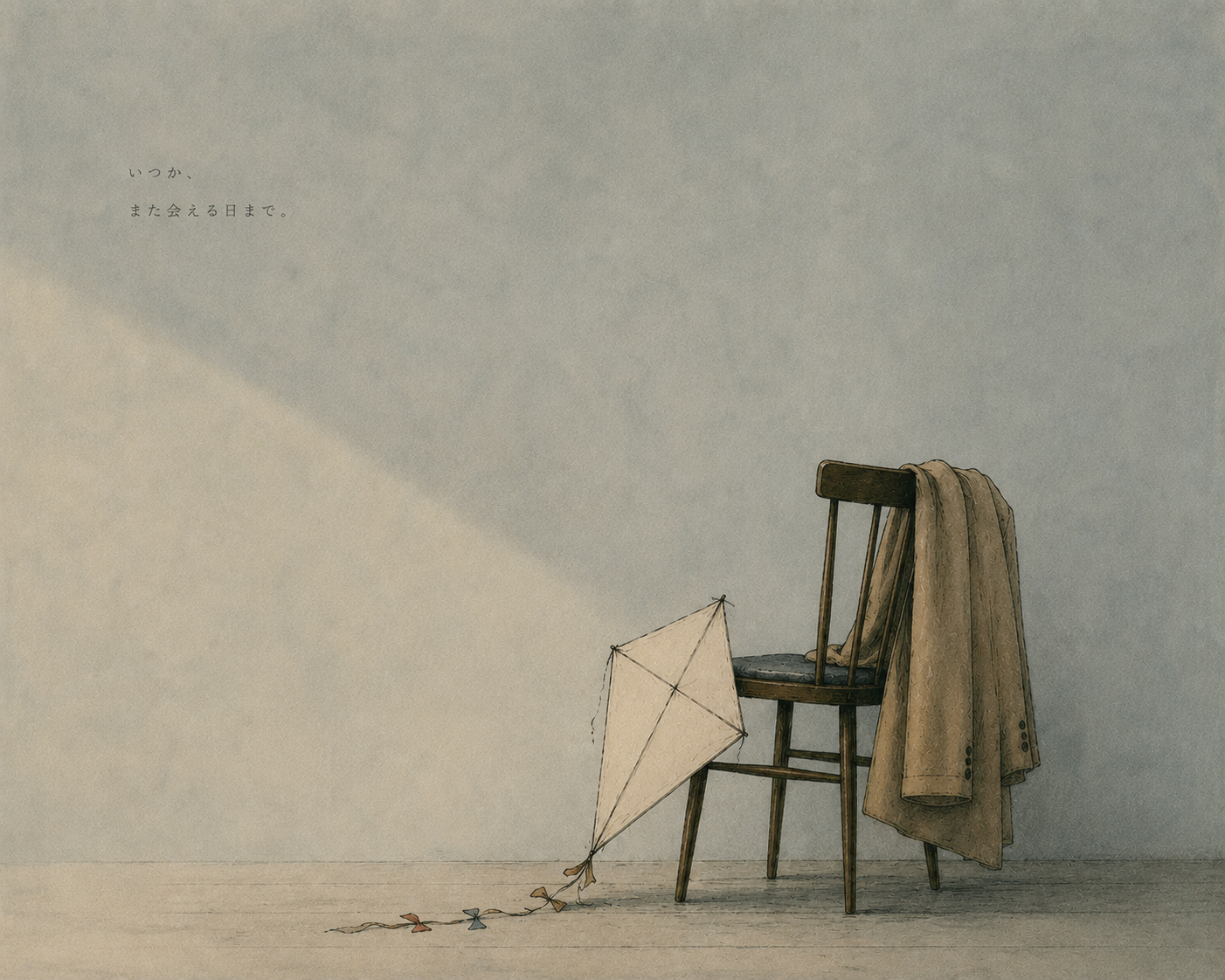
I think about the man afterward, in his own apartment, the borrowed coat over the back of a chair. He has been four fathers today, and a son at a funeral, and the best man for a groom whose actual friends all sent their regrets. In his bag there is a kite he never flew, because the ninety minutes ran out while the boy was still choosing a colour. He could return it. He will not. The next time that boy is booked he will bring it again, and the boy will not remember, and the man will remember every second.
I started this wanting to find the seam, the precise place where the performance ends and the true thing begins. I have looked closely now, closer than is comfortable. I am no longer sure it is anywhere. The part that keeps me awake is smaller and worse. It is that when the people who are not paid to love me show up on the days they did not have to, I feel something alarmingly similar to what that boy feels when he sees the kite.
How do you know it is different?

Elsewhere in this issue
What happens when cities briefly become ours before reminding us they never were.
A reflection on the small moments and observations that slowly teach us who people really are.
→ Historically, Being a Bridesmaid Was a Terrible Gig
A strange and fascinating look at how rituals, fear and human behaviour have always shaped the way we live.